Foods That Put Out the Fire

Chocolate bar

The catechins and polyphenols found in dark chocolate soothe inflammation in the body. photo credit: nkzs

Inflammation is a normal healthy process with a very important purpose – to protect our bodies from illness and injury. When you cut your finger, it turns red and starts to swell. Our immune system kicks in to fight infection. Inflammation can be a good thing! However, when the modern world bombards us with assaults from stress, chemical injury and inflammatory food triggers, many of us experience a constant low-level inflammation. Chronic inflammation is the underlying cause of heart disease, cancer, diabetes, Alzheimer’s, and autoimmune diseases – there aren’t many chronic diseases that aren’t caused by inflammation. The good news is that there is protection found in the healthy foods we eat.  Here are a few tips to help you “put out the fire” and fight inflammation with diet.

Stop feeding the fire.  Before you can put out the fire, you need to eliminate or significantly reduce foods that fuel the fire.  Elevated blood sugar and insulin levels are inflammatory triggers, so it’s important to keep your intake of  “fast” sugars and refined carbohydrates such as white flour to a minimum. Trans fats actually inhibit the anti-inflammatory pathway in our bodies, so should also be avoided.  These include stick margarines, vegetable shortenings, and are labeled as “partially hydrogenated oil” in many processed foods.   Minimize intake of grain-fed meats due to the pro-inflammatory omega-6 fat content (compared to grass-fed or pastured).  Finally, consider eliminating foods you might be allergic or sensitive to, because each time you eat these foods your body kicks off an inflammatory response.

Consider the types and amount of fat you’re eating.  Very simply, inflammation is regulated by a group of hormones called prostaglandins.  These hormones are made from fatty acids, with some fatty acids making pro-inflammatory and others making anti-inflammatory prostaglandins.  This means the types of fats you are (or are not) eating help determine the health of your inflammatory response.  Anti-inflammatory fats are the fats found in nuts and seeds of all kinds, olive oil and avocado. These are all good sources of monounsaturated fats.

Omega-3 fats are also anti-inflammatory. We need about a 1:1 ratio of omega-6 to omega-3 fats (most people get around 20:1 omega-6 to omega-3!). You want to eat more omega-3 fats (EPA and DHA) found in wild salmon and other cold-water fatty fish such as anchovies.  For many people, taking a high-quality fish oil supplement is a great way to boost omega-3 intake.

Almonds and blueberries

The monounsaturated fats found in almonds and the anthocyanins found in blueberries help fight inflammation. photo credit: Selva Wohlgemuth

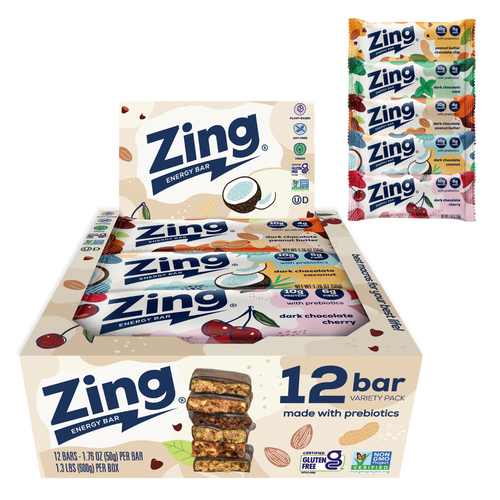
Add more color and zing to your diet!  Eating a rainbow of fruits and veggies is widely known for imparting many health benefits, including powerful antioxidants that fight inflammation.  Brightly-colored berries are high in anthocyanins, a potent antioxidant. Buy organic when possible in order to minimize exposure to pesticide residue.  At least consider buying the organic version of the 12 most contaminated produce items.  Dark chocolate is a treat to enjoy and also happens to contain significant amounts of polyphenols and catechins, similar to green tea, known for their anti-inflammatory properties. The darker the chocolate (more cacao content) the better. Consider a Zing bar as an excellent choice while on-the-go.  Cranberries, blueberries, nuts such as almonds, cashews, walnuts, peanuts and organic, fair trade dark chocolate are just some of the tasty ingredients found in Zing bars that fit the anti-inflammatory bill.

Savor your food.  Overall stress contributes to chronic inflammation, and this can include stressing too much about what to eat or not eat.  Being too strict or feeling guilty about foods that bring you pleasure just because you have heard they are “bad” can take all the enjoyment out of eating, so don’t insist on perfection when it comes to your diet!  As much as you can, begin the practice of sitting down when you eat your meals, chewing and savoring each bite completely.  And please stop eating over the kitchen sink!

We’d love to know, what anti-inflammatory foods do you include on a daily basis?

Erin Hugus, MS, CN has a Master’s degree in Nutrition from Bastyr University. Erin is an expert in Diabetes care and is passionate about empowering people with realistic strategies for optimal health. She takes great pleasure in her time spent in the kitchen and loves cooking nourishing meals for her family.

Is “Health Guilt” Making You Sick?

April 16th is National Stress Awareness Day, and April is Stress Awareness Month. Stress and health are closely linked and, as a health coach, Beth sees this in practice on a daily basis. 

The guilt from eating an unhealthy treat might just be worse for you than the treat itself.

“I feel so guilty…I had a big dessert last night. Now I feel like I worked out for nothing.” As a wellness coach, I hear this kind of confession all the time.  People feel guilty for lapses in lifestyle health behaviors — and a host of other things. What they often don’t realize is the connection between guilt, stress, and overall wellbeing — how feeling guilty about a choice may have the ironic effect of being more harmful than the choice itself.

Guilt serves a purpose in shaping behavior and compelling us to correct wrongs. And the right amount of stress is important to keep us feeling challenged and interested in our lives. But too much of either one can have devastating effects on mental and physical wellbeing.

Both guilt and stress raise blood levels of the hormone cortisol.  When cortisol levels remain high over time, they’re linked with elevated blood lipids, blood glucose, blood pressure, and abdominal obesity. These changes increase risk for obesity, type 2 diabetes, heart disease, stroke, and other serious medical issues. Chronically high levels of cortisol also increase risk for depression and other mental health problems.

Recently, a study was done on another inflammatory marker called C-reactive protein which is released from the liver during times of stress and illness. In this study, researchers put 34 women through a stressful task, and asked half of them to “ruminate” or dwell on the task. The other half was asked to distract themselves from the task at hand. The women who dwelled on the stressful task showed higher levels of C-reactive protein, which is linked to everything from Type 2 diabetes to heart disease.

Less Guilt, Less Stress, Better Health

Could you use a little less guilt and stress? Try these tips to shift your thinking and stay on track for better long-term health:

Avoid “good” or “bad” thinking. Over and over, clients tell me, “I was really good this week – I ate salad every day and I worked out 4 times.” News flash — eating nutritious foods or exercising doesn’t make you a good person. Eating less nutritious foods or not exercising doesn’t make you a bad person. Describing your health behaviors in moral terms sets you up for guilt and stress when your performance is less than perfect. Practice describing your behavior in more objective terms: “I made a lot of progress towards my wellness goals this week — I increased my daily vegetable servings and added strength training to my fitness routine.”

Stay calm and move on. Many people overreact to minor lapses in nutrition or exercise routines, triggering a negative downward spiral. Instead of acknowledging the decision wasn’t an optimal one and moving on, they dwell on it, and end up feeling worse — which often triggers more overeating and less exercise, which in turn, makes them feel even worse. And on…and on. So, let it go already; you can make a better choice next time. Get up and take a brisk, 10-minute walk to help calm yourself and boost your mood.

Be flexible. Being committed and focused on your wellness goals is one thing, but you have to allow room for flexibility and self-compassion — or a healthy lifestyle becomes unsustainable. If you always exercise at the gym on the way home from work — but forget your gym bag one day, will you blow off your workout? Or will you adapt to the situation and walk around your neighborhood when you get home? If you eat a maple bar out of the break room, will you throw out your healthy eating plan for the whole day, or will you acknowledge that you enjoyed the treat and move on, adjusting the day’s meal plan as needed?

Maintain a healthy perspective. Keeping a food and exercise diary can help defuse the stress associated with lapses by helping you think about your behavior more objectively. You may think you’ve eaten enough to gain 5 pounds; in writing it down, you see you’ve eaten an extra 500 calories; not fantastic, but not a crime — and not enough to gain a single pound, unless you do the same thing every day for a whole week.

Have you battled guilt and stress around lifestyle health habits? Share your best tip for breaking loose of this trap and moving on towards a healthier mindset.

Beth Shepard, MS, ACSM-RCEP, ACE-PT, has a master’s degree in Exercise Physiology from the University of Arizona. Beth is an expert in fitness and health promotion and a certified wellness coach, helping people thrive by adopting sustainable lifestyle changes. She and her family love to hike, bicycle, and try new sports. www.wellcoaches.com/beth.shepard

6 Natural Ways to Boost Your Mood

When clients tell me about their wellness goals, some want to lose weight or get fit — but just as many report wanting to feel more lively and upbeat. It’s not uncommon for energy and mood to fluctuate with the seasons — even if you don’t have seasonal affective disorder, which affects a relatively small percentage of the population. Spring is just one day away, but many of us are still feeling the late winter doldrums. Physical and mental health, your social life, work culture, life stage, and family dynamics are just a few of the factors that affect how you feel from day to day.

Here’s the good news — there are practical steps you can start taking today to improve your overall mood, naturally:

Sleeping girl

1.  Get the right amount of sleep. Most adults need about 7-8 hours of sleep to feel their best. Not enough — or too much — and you’ll pay a price in terms of energy, attitude, and well-being. So, for better quality zzzs, power down the electronics an hour before bedtime, establish a relaxing bedtime routine, and practice good sleep hygiene.

Outdoor exercise2.  Work up a sweat — outside. Even a short, brisk, daily walk does wonderful things for mental health; the effects are even stronger if you exercise in a natural setting — near trees or a lake, for example. And even a single cardiovascular workout can boost mood for up to 12 hours!

3.  Cut back on mood-busting foods. As Erin covered in a recent post, consuming too much sugar, white flour, trans fats, food additives, and caffeine can make you cranky, tired, and anxious — and can even contribute to migraines. Gluten is also problematic if you’re sensitive to it. For optimal well-being, choose whole foods like fruits, vegetables, whole grains, monounsaturated fats (like olive oil) and lean sources of protein.

4.  Reduce your stress. Nothing will exhaust you faster than carrying a heavy load of burdens. Spend some time identifying your major stressors. Take steps towards resolving the ones you have control over, and changing the way you respond to the ones you don’t have control over. Practice stress management techniques like mindfulness meditation, relaxation breathing, and progressive relaxation. For serious issues, seek professional help; if you have access to an employee assistance program (EAP), that’s a good place to start.

5.  Be more social. Connect with friends and family in person at least several times a week; online networking is convenient and fun, but it’s not the same as having a face-to-face conversation. Spending time with people you enjoy strengthens relationships, enriches your life, and builds memories. If your social life has room for improvement, make an effort to reach out — invite a coworker to join you for lunch, plan a weekend day hike with friends, or ask another family to join yours for a trip to the local aquarium.

6.  Smile more. A recent study shows smiling — even when you don’t feel like it — relieves stress, boosts mood, and even improves heart health. Try it while working out, during the morning commute, or when that quirky co-worker is headed in your direction. Ever heard of laugh therapy? Try it!

We all have favorite ways of boosting mood in the moment; searching “laughing babies” video clips works for me, every time! But adopting healthier lifestyle habits is the best way to increase your odds of feeling good each day. Taking better care of yourself leads to less physical and mental stress — and that’s really something to smile about.

What are your favorite natural mood boosters?

Beth Shepard, MS, ACSM-RCEP, ACE-PT, has a master’s degree in Exercise Physiology from the University of Arizona. Beth is an expert in fitness and health promotion and a certified wellness coach, helping people thrive by adopting sustainable lifestyle changes. She and her family love to hike, bicycle, and try new sports. www.wellcoaches.com/beth.shepard

Does Eating Late Make You Fat?

On a typical day as a dietitian in a busy clinic, I will hear the following comment at least twice before lunchtime “I’m trying not to eat after 7pm, because I know that eating late makes you gain weight!” I never quite know what to make of this declaration. Are these folks nighttime bingers, eating large amounts of junk food out of boredom or exhaustion, or do they believe that having a sensible dinner after 7pm will, no matter the calories, turn directly into fat?

I have attempted to dispute the fact that eating your biggest meal of the day (dinner for most people), when healthy and not excessive, has no bearing on whether or not someone will gain weight.  I also make sure my patients know the importance of fueling their bodies throughout the day, and that skipping meals is not the answer to weight loss.  According to all the research I had read, weight loss depends on the total number of calories you eat versus the amount that you expend, as long as your caloric intake is balanced and low-glycemic. Well, a new study has come out to question this long-held belief that when you eat the bulk of your day’s calories doesn’t matter.

I first heard about this new study in one of my favorite blogs – the Well Blog from the New York Times.  The study was first published in the The International Journal of Obesity. In this 20-week study, researchers put 420 men and women on a similar meal plan designed for weight loss. All of them ate the same total number of calories, but half the group ate the biggest meal of the day before 3pm, and half the group ate theirs after 3pm.  At the end of the study, the late eaters lost significantly less weight and showed lower insulin sensitivity, which is a precursor to type 2 diabetes.

This study helps shed light on a mysterious trend that I have been witnessing – that my most obese patients, many of them with type 2 diabetes, are notorious meal-skippers.  They skip breakfast, and sometimes even lunch, and then eat a very large dinner. I’ve been puzzled as to the seeming correlation between skipping meals and eating late with obesity and diabetes, and now I know it may not be coincidental.  I find this new research exciting – we’re finding out more and more that the equation for weight balance isn’t the old “calories in/calories out” rule.

When do you eat your biggest meal? Do you have a certain meal cutoff time that works for you?

Christine Weiss MS, RD is a dietitian and Bastyr University graduate who counsels people dealing with food allergies, diabetes and digestive issues.  She enjoys working with Zing Bars to raise awareness about healthy living through online media. She can be found at Eating It Up online.


6 Fun Fitness Apps to Help You Stay on Track

When I ask previously active clients what made them stop exercising, many of them point to two common culprits. The first is boredom, and the second is lack of measurable progress — they didn’t know if they were really getting anything out of it.

It’s not surprising. Even top-notch fitness programs become routine and rather blah if you do the same things over and over; and, if you’re not sure you’re getting a benefit, why make the effort?

I could write a book about all the wonderful benefits of regular exercise, but that won’t help you get out of bed at 5:00 a.m. so you can sweat out a workout before the morning commute.  Instead, I’ll point you to something that more and more people are using to nurture their everyday exercise habits — fitness apps.

With these pint-size programs, you can conveniently track your workout length, intensity, heart rate, and calories burned; watch videos on exercise technique; chart your progress and watch your steps and miles add up; see your resting and exercise heart rates go down as your fitness level improves; get personalized advice on how to improve your exercise program; and go social, sharing fitness achievements with friends and family.

Interested? Here are a few of my favorites:

Fitbit: This app comes with a small clip-on device that measures daily steps, automatically uploading them to the Fitbit website with the help of a USB-based receiver. The Fitbit One model even uses Bluetooth technology to connect with your phone. The website and app gives you your daily and weekly step total, and sends you a weekly performance summary. For more on Fitbit, check out Sandi’s blog post.

Striiv: This app turns your iPhone into a pedometer, offering a variety of fun challenges to keep you moving. Just turn it on, stick it in your pocket, and go. Striiv tracks your steps, exercise minutes, distance, and calories.

Nike Training ClubGet indoor exercise programs in 15, 30, and 45-minute increments, along with beginner, intermediate, and advanced exercise options. This app also offers video demos of various exercises along with descriptions and photos.

JEFIT: You can easily create a custom strength-training routine with this app, which features a huge database of exercises to target each of the major muscle groups. Action photos are provided for each exercise to demonstrate proper form

Healthy Habits: This tool lets you track daily habits with a simple checkmark; choose from items in the Habit Library or create your own.

MyFitnessPal: If connecting with fitness friends is a big motivator for you, try this app, which lets you track your workouts and share them with friends for accountability and encouragement. I’ve also gotten great feedback about the app’s food log, helping you track your calorie intake.

Apps and gadgets are terrific tools for keeping the fun in fitness; but remember there’s no substitute for professional medical and fitness advice. For safety, check with your doctor before starting an exercise program. And for best results, work with a certified personal trainer or exercise specialist  to make sure the exercise program you select is a good match for your health issues, abilities, and goals — no matter which digital training partner you choose.

Which apps have helped you reach your fitness goals?

Beth Shepard, MS, ACSM-RCEP, ACE-PT, has a master’s degree in Exercise Physiology from the University of Arizona. Beth is an expert in fitness and health promotion and a certified wellness coach, helping people thrive by adopting sustainable lifestyle changes. She and her family love to hike, bicycle, and try new sports. www.wellcoaches.com/beth.shepard

Foods That Bust Your Mood

Feeling blue?  Anxious or irritable?  Tired and unmotivated? What you’re eating could be the major culprit.  Here are some foods that bust your mood.

Sugar

photo credit: Jade Gordon

  • Sugar and white flour  Delicious in Aunt Mildred’s homemade apple pie, abundant in many packaged and processed food products, these two foods are famous for causing our blood sugar and insulin levels to spike and then come crashing down.  This roller coaster ride isn’t much fun, as it can leave us feeling irritable, tired, and anxious.  I’m not saying you should avoid eating a slice of Aunt Mildred’s pie, but keeping it to the occasional indulgence is important if you want to keep your blood sugars steady.
food label
  • Trans fatty acids  Trans fats (aka hydrogenated fats or partially hydrogenated oils) are formed when a natural fatty acid is changed into an unnatural form by the addition of hydrogen molecules.  This doesn’t sound all that harmful, but consuming trans fats actually interferes with the body’s ability to use essential fatty acids, including omega-3 fatty acids.  Insufficient omega-3 fat intake has been linked to many health conditions, including depression, learning difficulties and hyperactivity.
Candy
  • Food additives  This includes artificial flavors (such as MSG), sweeteners (such as aspartame and Splenda), and food colorings found in many packaged and processed foods.  Certain additives can act as neurotoxins in some people, causing symptoms such as migraines, insomnia, anxiety and depression.  While some experts maintain that there isn’t enough scientific evidence to support this idea, common sense tells us that compared to eating a simple whole food such as an apple, eating a food additive made in a lab is going to have an adverse affect on our health, whether it is to increase inflammation or bring on a migraine or other unwanted outward symptom.      
bread

photo credit: Kongroove

  • Gluten  A reaction to gluten can cause many health issues, including headaches and migraines, brain fog, anxiety and even depression.  If you have been experiencing any of these symptoms and haven’t been able to determine the cause, it would be worth talking to your doctor or nutritionist about possible gluten sensitivity.  They might recommend a blood test or even an elimination diet.
coffee

photo credit: FlorinN

  • Overuse of caffeine Moderate doses of caffeine (200-300 mg, or 2 to 4 cups of brewed coffee per day) are not likely to be harmful for most healthy adults, and can even have the beneficial effect of improving concentration and alleviating fatigue.  But some people are more sensitive to caffeine, and even a small amount can cause unwanted effects such as disrupting sleep and feeling jittery or anxious.

Eating a whole foods diet, rich in fresh, organic fruits and veggies and healthy fats could have a significant impact on alleviating the blues and many other symptoms. We can’t always cook from scratch, so when choosing packaged foods read labels carefully and buy the foods with recognizable (i.e. found in nature!) ingredients.  Ask yourself, ‘Can I imagine it growing?’  If the answer is no, skip it and find an alternative.

Have you discovered certain foods that significantly affect your mood?

Erin Hugus, MS, CN has a Master’s degree in Nutrition from Bastyr University. Erin is an expert in Diabetes care and is passionate about empowering people with realistic strategies for optimal health. She takes great pleasure in her time spent in the kitchen and loves cooking nourishing meals for her family.

Four Easy Ways to Beat the Winter Blahs

Are you feeling those January blahs? After the holidays, low energy and decreased vitality can creep into those short winter days, leaving you feeling, well… blah.  Here are four ways to get back into the game.

Stay Hydrated 

Water is vital for beating winter fatigue.  Males require on average about four liters of water per day, and women about three liters.  Keep in mind that this total includes all sources of fluid, including food.  During the winter, we can easily become dehydrated which zaps energy, and dehydration can become confused with hunger, leading us to overeat (hello winter pounds!). A few ways to stay hydrated:

  • Lemon juice and water upon waking can do wonders for you morning routine. Lemon juice helps stimulate detoxification, increases bowel movement, and is a powerful antioxidant. Drink ½ squeezed lemon with a tall glass of water half an hour prior to breakfast.
  • Skip sugar-laden drinks. Not only do they add additional calories, but they also spike blood sugar leading to a burst of energy, then a crash within the hour.
  • Drink herbal teas. These aid digestion, stimulate your senses, or even calm you down after a long day at work. Try peppermint for digestion, ginger for stimulation, and chamomile for relaxation.
  • Drink green and black tea instead of coffee. Green and black teas do contain caffeine but not nearly as much, preventing the inevitable “coffee crash”.  A single cup of black tea may contain between 32 and 144 mg of caffeine, while green tea contains only 25 mg.

Sleep

Sleep is not for the lazy, it is for the healthy! Our bodies need 7 to 9 hours of sleep in order to heal and repair the damage we have caused during the day. Tips to increase your sleep quality:

  • Don’t go to bed with a full stomach. Besides being uncomfortable, it switches the focus of the body from healing and repair to digestion. Aim to finish your meal at least 2 hours before going to bed.
  • Keep your glass of wine or beer with dinner only. Drinking right before bed causes the body to focus on metabolizing alcohol, taking precedence over other functions like healing and repairing tissues. It also disrupts sleep quality, making it that much harder to wake up feeling refreshed on those dark winter mornings.

Eat a good breakfast

Eating a whole foods breakfast filled with low glycemic carbohydrates and protein will help keep you fueled throughout the morning. The brain alone utilizes about 130 grams of carbohydrates per day (equivalent to 3 cups of rice or pasta!). Too little brain fuel can cause mental and physical fatigue. Getting your boost from low-glycemic whole-grain choices that are rich in fiber and nutrients helps keep you energized. Breakfast ideas:

  • I love this recipe with rolled oats, grated apple, and berries. Topped with nonfat yogurt, chopped walnuts, and a drizzle of maple syrup, it’s the perfect winter breakfast!
  • Black beans and braised kale topped with a fried egg and a slice of whole-wheat toast.
  • If you are on the go, a Zing Bar and an orange will help keep you on your toes throughout the morning.

Get more Magnesium

Magnesium is a vital mineral needed for over 300 biochemical processes in our body. However, many of us don’t get enough.  Since magnesium is key in energy production, a deficiency can mean lethargy. Most adults need about 300mg per day. Luckily, I can think up all sorts of warming winter meals with these magnesium-rich foods:

  • 1 oz of almonds: 80 mg Mg
  • 1/2 cup cooked spinach: 78 mg Mg
  • 1/2 cup cooked brown rice: 42 mg Mg
  • 3 oz cooked halibut: 24 mg Mg

We want to know, how do you beat the winter blahs?

Selva Wohlgemuth is working on her Master’s degree in Nutrition at Bastyr University. She is an avid cook and blogger, and you can find out about her latest culinary adventures and see more of her food photography at Poppies and Papayas.


Failing Those Resolutions? Why the Resolutions, Not You, May Be the Problem

Photo Credit: Alan Cleaver

Those of you who have read my blogs for a while know that I am not a fan of New Year’s Resolutions. If you can relate to my patient Anna’s story below, then you’ll know why I feel the way I do. This is what turned Anna from a goal-setting optimist into a blathering mess last year.

Anna spends some time in December setting her New Year’s Resolutions. She is disappointed and frustrated that she still has not lost the 15 pounds she wants to lose so “lose weight” is at the top of her list. It’s followed by resolutions like “give up eating ice cream”, “work out at 5am every morning”, “keep the house organized”, “get out of debt” and “don’t scream at the children”.

On January 1st, she is excited for her 5am workout. She finished the quart of ice cream the night before. She has installed a budget-tracking program on her computer and the list of chores to keep the house organized is on the fridge.

By January 12th, she is exhausted, yelling at the kids and eating ice cream on the couch. She feels like she is a failure.

If only she knew that she is not the failure. It is the New Year’s Resolution plan that is the problem.

There is nothing wrong with having goals. However, when it comes to making lifestyle changes, I recommend that you choose one main goal and then take baby steps towards achieving that goal.

If Anna wants to lose 15 pounds this year, then she will want to work towards that outcome goal with small, sustainable steps that she can maintain long-term. Perhaps, her initial goal is to keep the ice cream out of the house but enjoy a single scoop at the ice cream store once a week.

It’s important to stay away from “all or nothing” thinking when it comes to sustainable goals. Anna commits to exercising at 5am every morning. She may want to start with 2 or 3 mornings each week and see how that goes. She may also want to have a Plan B for the days she hits the snooze button a few too many times. Maybe she does a yoga DVD in the evening or takes a 30-minute walk with a coworker at lunchtime.

It is also vital to set up support for whatever goal you choose. If Anna wants to scream less at her kids, she may want to learn some new parenting strategies by reading a book or taking a class. She may also want an email or phone check-in with a buddy who is also a parent. They can debrief with each other and help each other get back on track.

There is an acronym that we use when helping patients set goals – SMART goals are goal that are:

Specific: If my goal is to simply “eat healthier” then why not specify how that will be done? For example “eat half a plate of vegetables at lunch and dinner” is specific enough to prepare you for action.

Measureable: Instead of saying “exercise more” why not try “exercise for 30 minutes three times weekly.”

Attainable: So many people set incredibly lofty goals, only to realize that they aimed too high. Remember, baby steps! Instead of someone who hasn’t exercised in years saying “I will run a marathon in 9 months,” why not aim for a half marathon, or even just jogging a few times per week. Focus on the larger goal once you have attained the first goal.

Realistic: “I will never eat ice cream again.” Okay, this one is obvious.  Are you seriously going to give up the Ben & Jerry’s for good? I think not. However, as with my patient example above, you can still enjoy ice cream sometimes without keeping that Costco-sized container within arm’s reach.

Time-associated: Set a deadline. We humans are awful procrastinators when given the chance. Setting a deadline and putting it on your calendar is a great motivator.

Goals need to be revisited throughout the year. There is nothing magical about January 1st. Some people like to set seasonal goals (especially when it comes to physical activity and nutrition). Others review their goals monthly or weekly.

Whenever you do set goals, just remember to start small, build on your successes and get lots of support. Then you won’t be frustrated by mid January and you’ll have plenty of energy to keep moving forward toward long-lasting behavior changes.

If you’re setting resolutions this year, what are they, and how have you made them work for you?

Here’s to a successful 2013!

8 Ways to Get Off of the Couch This Winter

Two women on couch

Are you a fair-weather outdoor exerciser, like me? I love walking, running, and bicycling outdoors, but I hate working out in the rain. So instead of letting soggy Pacific Northwest weather interfere with my active lifestyle, I’ve come up with a ton of fun ways to stay active with a roof over my head. So whether you’re dodging the raindrops or shrinking away from below-freezing temps, you’ll benefit from some of my indoor favorites:

  1. Go nowhere fast. I adore my stationary bike and treadmill — because I can work up a terrific sweat, whatever the weather, while watching movies or listening to podcasts and playlists. Home exercise equipment makes working out convenient — and that’s half the battle.  But don’t stick it in the basement – you’ll never use it. I keep mine in plain view, in the living room and family room.
  2. Get down. Exercise equipment is effective, but sometimes it just doesn’t appeal. That’s when I break out the Just Dance® DVDs and bust a move with my teen daughter. For me, dancing is so much fun that I forget I’m getting a good workout.
  3. Be creative. Craft a circuit workout, alternating strength and cardio stations. Turn on your favorite high-energy tunes and start with a 5-minute warm-up — marching in place/dancing/jumping jacks. Then, rotate through ten 1-minute stations — examples: jogging or walking in place, burpees, jumping rope, push-ups, step-ups (using the first stair in your staircase), planks, grapevines, alternating lunges, dancing, and triceps dips using a chair.  Repeat the circuit 1-2 times for a 20-30 minute sweat session. Follow with 5-10 minutes of easy walking to cool down.
  4. Play. Most elementary school playgrounds (around here, anyway) have a covered area — so on a rainy day, sometimes we opt for a little Frisbee®, basketball, or freeze-tag action.
  5. Head to the gym. It’s an old standby, but it works for me — and it gets me out of the house. The bonus? Being around other people focused on a good workout is very motivating.
  6. Crank out some planks. Sometimes you just need to get off your duff — and doing planks is an easy way to do it. More often than not, I feel so motivated after a few planks that I pound out a few pushups and back exercises while I’m on the floor.
  7. Chill. Head to your local indoor ice rink and bring out your inner Michelle Kwan or Wayne Gretzky. Ice skating builds strength, balance, and cardio fitness, and you’re never too old to learn how — most facilities offer group and private lessons.
  8. Make a splash. I won’t run in the rain, but I love to swim; maybe it makes sense, maybe it doesn’t. But there’s nothing like a full-body water workout for leaving me oddly energized and relaxed at the same time. Whether you’re a hard-core lap swimmer, a water-walker, or enjoy water fitness classes, jump in and enjoy the benefits of a buoyant workout year-round.

Don’t let wet fall weather foil your fitness plans. Invite a friend to join you in brainstorming your own list of indoor fitness favorites. Got a great rainy-day workout idea? We’d love to hear it.

Beth Shepard, MS, ACSM-RCEP, ACE-PT, has a master’s degree in Exercise Physiology from the University of Arizona. Beth is an expert in fitness and health promotion and a certified wellness coach, helping people thrive by adopting sustainable lifestyle changes. She and her family love to hike, bicycle, and try new sports. www.wellcoaches.com/beth.shepard

A New Way to Give Thanks: Happiness

Woman Smiling

Image courtesy of godoflite

My Thanksgiving Day goal this year is simple: I want to be happy.

It turns out that being happy is much more than just a feel-good pursuit; happiness improves health, longevity, relationships, and workplace success. Happier people are also more likely to volunteer and contribute to charity.

People often assume that you must first be healthy and do good deeds in order to be happy. But studies indicate it usually happens in reverse: be happy so that you can be healthy and do good.

If there’s still a part of you that believes being happy rather than constantly putting others first is selfish or wrong, I encourage you to reflect on this question posed by Portland-based life coach Amy Pearson: “What would your childhood have been like if your mom was always happy?”

Personally, I am working on giving myself permission to be happy and to do what makes me happy – every day. Here’s what I’m planning specifically this Thanksgiving Day, which also happens to be my favorite holiday:

  • Get enough sleep the night before. Come Wednesday night, the little kid in me is going to think, “Woohoo, no school tomorrow!” and want to stay up late watching endless TV clips on Hulu – but I know I’d regret it the next day. You’ve probably heard about all those studies indicating how profoundly important sleeping well is to your health, weight, and mood.
  • Do some yoga. I’m often amazed by how much a single yoga class can shift my mood and perspective in a positive direction. Most yoga studios I know will have one class on Thanksgiving, usually with a gratitude-focused theme. Attuned exercise, where you’re mindful of your movements and connected to how your body feels, promotes wellbeing and a healthy relationship with food (in a way that exercise involving numbing or zoning out doesn’t). Other attuned exercise ideas are walking in nature, tai chi, qi gong and dance such as Nia.
  • Engage the senses to maximize pleasure. My fiancé Ben and I are hosting Thanksgiving for “misfits” like us this year (people who don’t have family in town). While I love to entertain, my tendency is to be preoccupied with how my guests are doing. This year, I still want to be a conscientious hostess, but I plan on paying extra attention to my own experience. That means engaging my senses to really take in the beautiful spread with my eyes, appreciating the delicious aromas during and after cooking, and really tasting each bite. Zen teacher Jan Chozen Bays, MD, author of Mindful Eating calls this satisfying your “eye hunger,” “nose hunger,” and “mouth hunger.” It’s a given I’ll be satisfying my “stomach hunger” – but only until I’m pleasantly full rather than painfully stuffed.
  • Take in the good.  Brain research reveals that the brain is biased towards negativity; Neuropsychologist Rich Hanson, PhD says the brain is “Velcro for negative experiences, but Teflon for positive ones.” Hanson came up with the practice of “taking in the good,” which means noticing and truly allowing positive experiences to sink into your being. So when I notice something positive – like the look in Ben’s eyes when he tells me he loves me or the fun experience of cooking together – rather than letting the experience pass by before getting quickly distracted again, Hanson recommends softening and opening up to it for a bit longer, even ten or twenty seconds. A steady practice of “taking in the good” helps rewire the brain to overcome the negativity bias, allowing it to be happier, calmer, more confident and resilient over time.

 May you have a very Happy Thanksgiving and holiday season!

Minh-Hai Tran, MS, RD, CSSD is one of the co-founders of Zing bars, and the owner of Mindful Nutrition, a nutrition practice in Seattle specializing in Intuitive Eating, eating disorders, sports nutrition, and more. To learn more, check out her website at www.MindfulNutritionSeattle.com